TheStromads.com contains affiliate links and participates in affiliate programs, including Amazon Services LLC Associates Program. If you click a link and make a purchase, we may earn a small commission at no additional cost to you. Read our Privacy Policy and Affiliate Disclosure.
Visiting the Salton Sea isn’t your typical California road trip—and that’s exactly why it stands out.
If you’re wondering whether the Salton Sea is worth visiting, what there is to do, or why this place feels so strange, the short answer is: it’s one of the most unusual destinations in the state. You won’t find swimmable beaches or polished resort towns here. Instead, you’ll find abandoned marinas, offbeat desert art, and a landscape shaped by both human ambition and environmental decline.
In this guide, we’re sharing what it’s actually like to visit the Salton Sea, what to see around it, where to stay, and the things you should know before deciding if this unusual desert stop belongs on your road trip.
When I booked us into Mecca Beach Campground for a few days, I wasn’t entirely sure what to expect from the Salton Sea.
I just knew it looked strange, abandoned, and completely different from anywhere else we’d visited in California.
But when we pulled into the campground, we immediately started second-guessing the decision.
The area was empty. No ranger, no campers, no movement anywhere.
Just one car sitting quietly under a tree.
Yeah… it felt a little creepy.
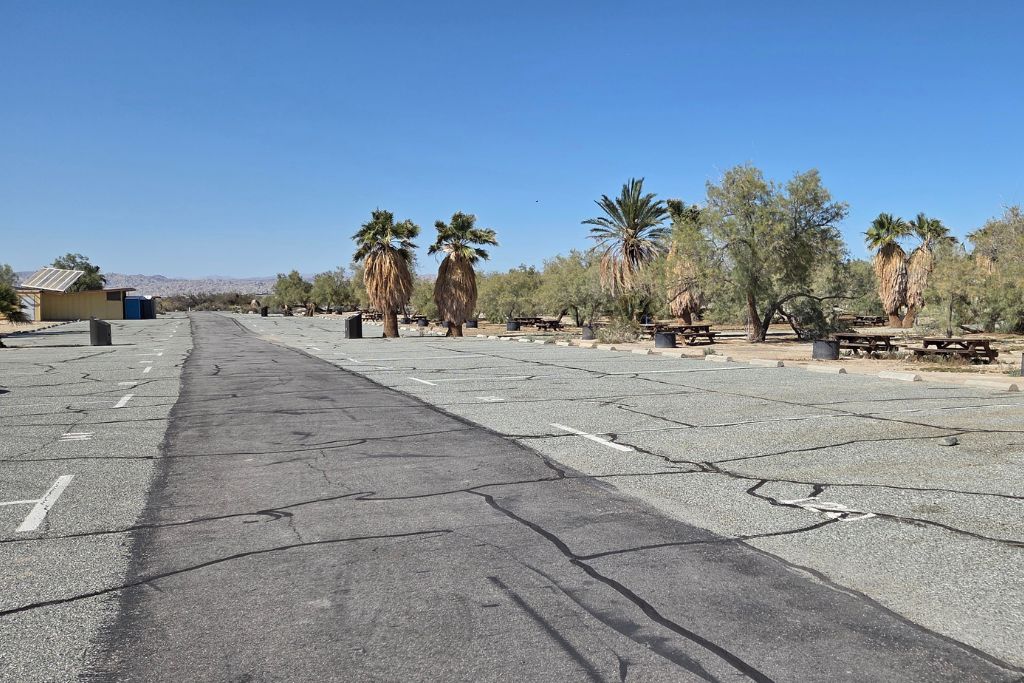
But that uneasy feeling is exactly what makes the Salton Sea one of the most memorable places we’ve explored in California.
Where Is the Salton Sea?
The Salton Sea is located in Southern California, between Palm Springs and Imperial Valley, near destinations such as Joshua Tree National Park and Anza-Borrego Desert State Park.
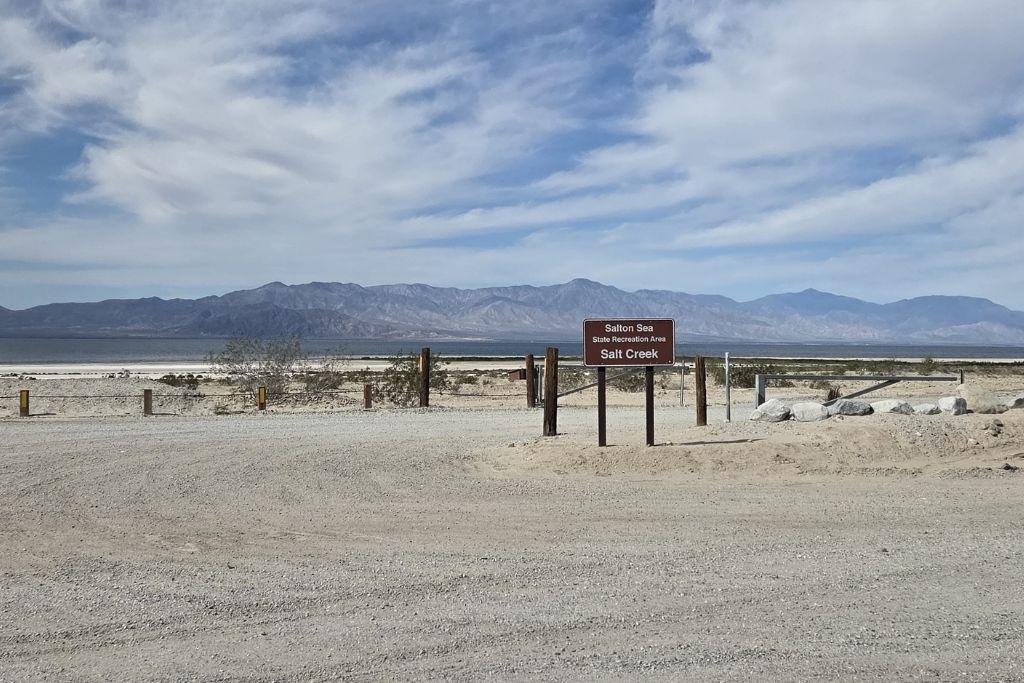
The lake stretches roughly 35 miles long in the middle of the Colorado Desert and sits more than 200 feet below sea level.
Despite being the largest lake in California by surface area, it is still unknown to many travelers.
That’s part of what makes visiting feel so unusual.
Is the Salton Sea Worth Visiting?
Yes—but only if you know what kind of place you’re visiting.
The Salton Sea is not a typical California destination. You won’t find clean beaches, waterfront resorts, or clear blue water you’ll want to swim in. In fact, the water is toxic, and swimming at the Salton Sea is not recommended.
But people don’t come here for a beach vacation.
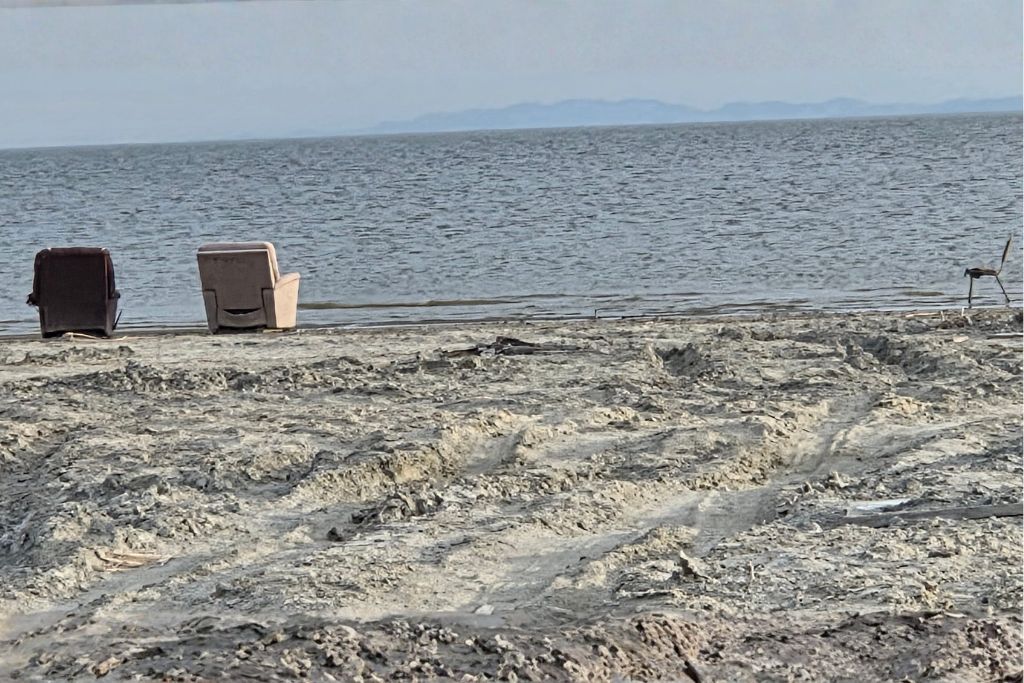
They come for the strange atmosphere, abandoned marinas, desert art, quiet roads, and places like Bombay Beach and Salvation Mountain that feel completely unlike the rest of California.
At times, the area felt eerie and almost forgotten. Some parts were fascinating. Other parts made us slightly uncomfortable. That contrast is what made the Salton Sea so memorable to us.
If you enjoy unusual road trip stops, photography, desert landscapes, or exploring places that feel a little off the beaten path, we think the Salton Sea is absolutely worth visiting.
If you’re expecting a traditional lake destination or relaxing resort town, this probably isn’t the place for you.
What Visiting the Salton Sea Feels Like
The drive into the Salton Sea felt surreal from the start. One minute, we were passing through lush farmland; the next, we were surrounded by desert, crumbling buildings, empty roads, and silence.
It makes you wonder what happened here.
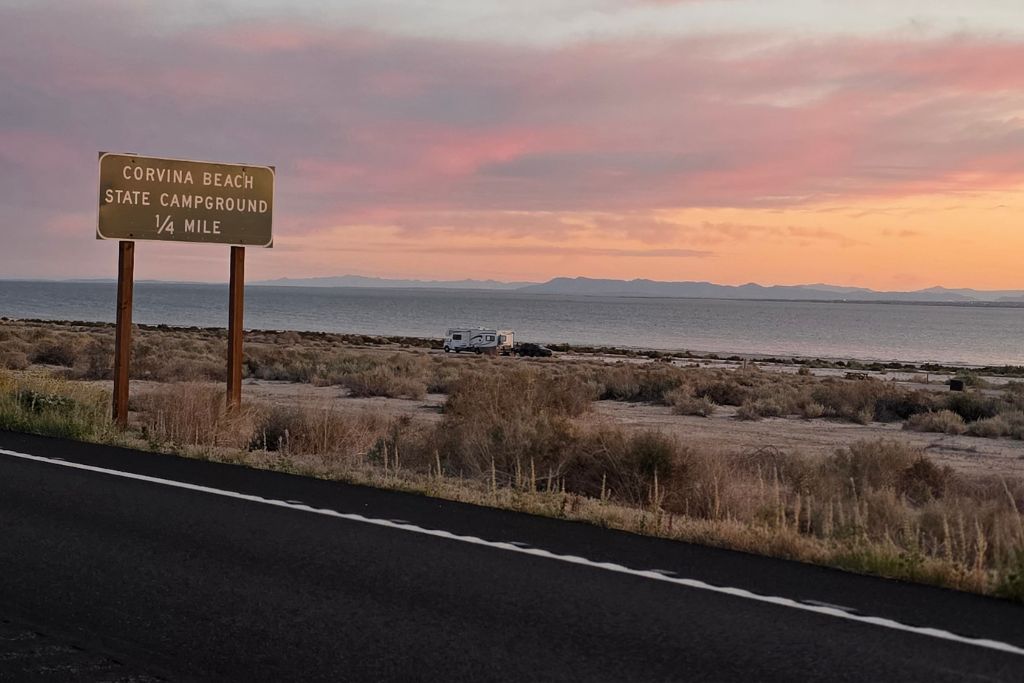
How does a place this large become forgotten and desolate? It’s hard to believe it even exists.
For a lake this size, you might expect beach towns, restaurants, and boats out on the water.
That’s not what you’ll find here.
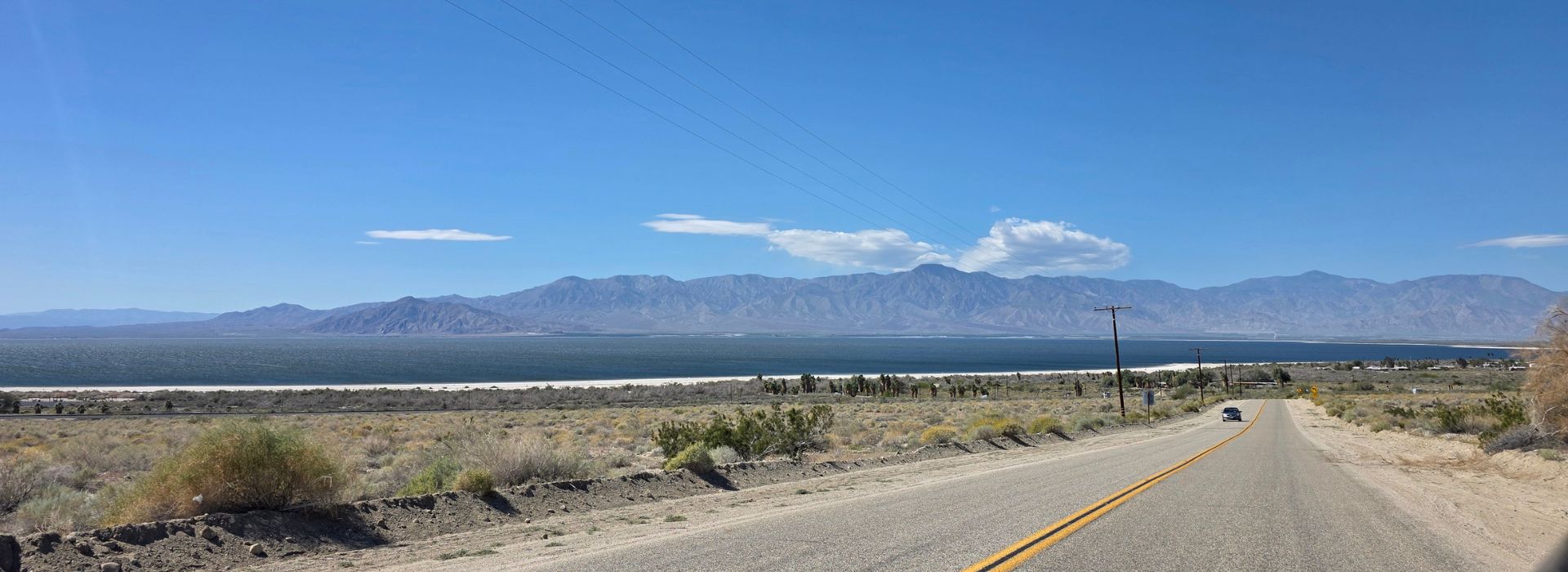
Driving along Highway 111 feels quiet and exposed, with the Chocolate Mountains to the east and the Orocopia Mountains to the north. The Salton Sea stretches out to the west, but instead of energy and activity, there’s a stillness that’s hard to explain.
For the most part, it’s just a long two-lane desert highway.
We visited on a cooler day, and the smell people often talk about wasn’t noticeable. From what we’ve read, that’s not always the case.
The sky was hazy, the air dry and salty, and the shoreline felt… off.
There are crumbling marinas, aging trailer parks, and small pockets of communities that feel like they’ve been left behind.
And then you start seeing signs for places like Bombay Beach, Salvation Mountain, and Niland.
That’s when the curiosity kicks in.
These places certainly do exist. and now you’re in the middle of them.
Best Things To Do Around The Salton Sea
While the Salton Sea itself is fascinating, the places to explore around it make it worth going.
Bombay Beach
The heyday for Bombay Beach has long gone, but the vibe is still alive. While it looks like a small residential town, Bombay Beach holds some unique treasures for the curious.
The best part of the town is the artist installations on the playa and throughout the town. There are doorways, front porches, a beached pirate ship, and sunshine to name a few. Many have been designed and built as a tribute in hopes of saving this forgotten sea. We even used the spirit phone booth in the coffee shop.
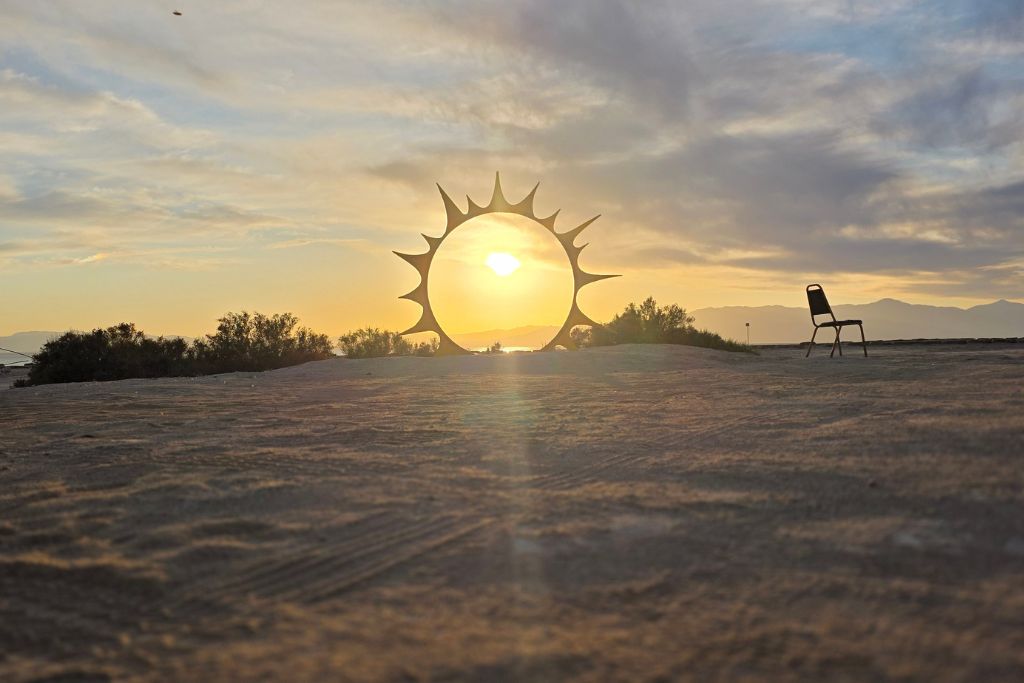
While we were there, we also rode past the ruins of Bombay Beach, walked around the archaeological site, and had lunch at the world-famous Ski Inn.
Bombay Beach is a peculiar town, worth seeing if you are in the area. Plan to spend a few hours exploring.
Slab City
Whether it is morbid curiosity or something more heartfelt, Slab City was on our list of places to see.
The slabs are situated on a decommissioned WWII Marine Base. The buildings were torn down, and the area was vacated.
Slowly, people migrated to this area either by choice or circumstances. It is an off-grid community, without electricity, water, or boundaries. Riding through Slab City makes you realize how self-sufficient people can be without access to a local Home Depot, Walmart, or trash service.
Slab City has been dubbed “the last Free place in America.”
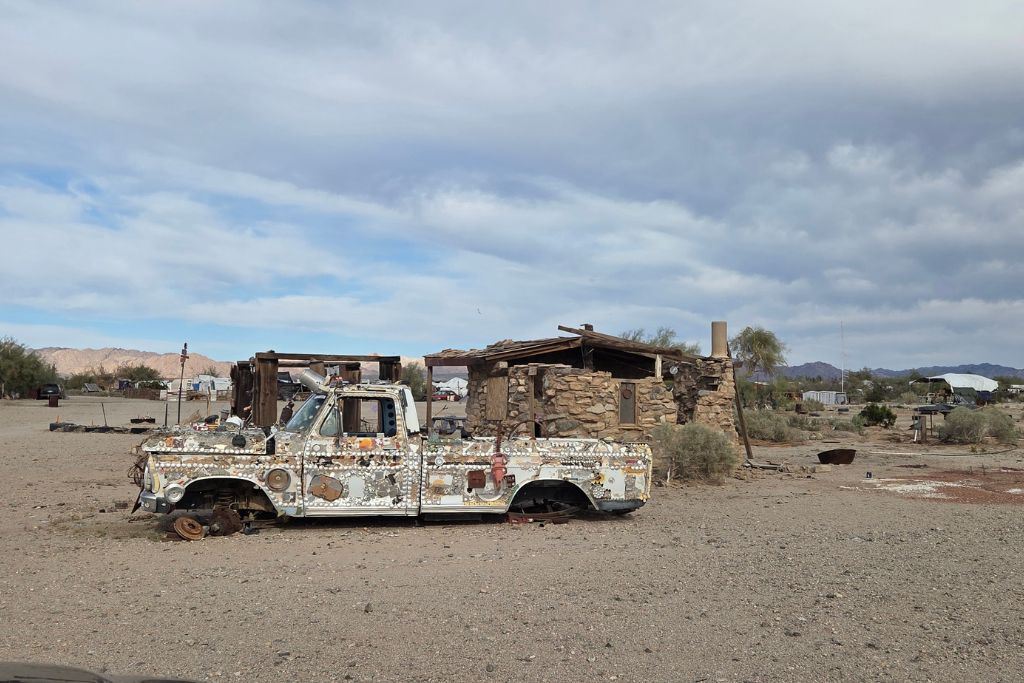
It is not a place to gawk, but to recognize the hardships some face. It is also a place to see the ingenuity it takes to make a home in unforgiving conditions.
East Jesus
Located deep within Slab City is a community of eccentric artists. Within the gates of East Jesus, you will find bizarre art installations that share thought-provoking messages.
I think my favorite is “We don’t want your money, we want the stuff in your garage.”
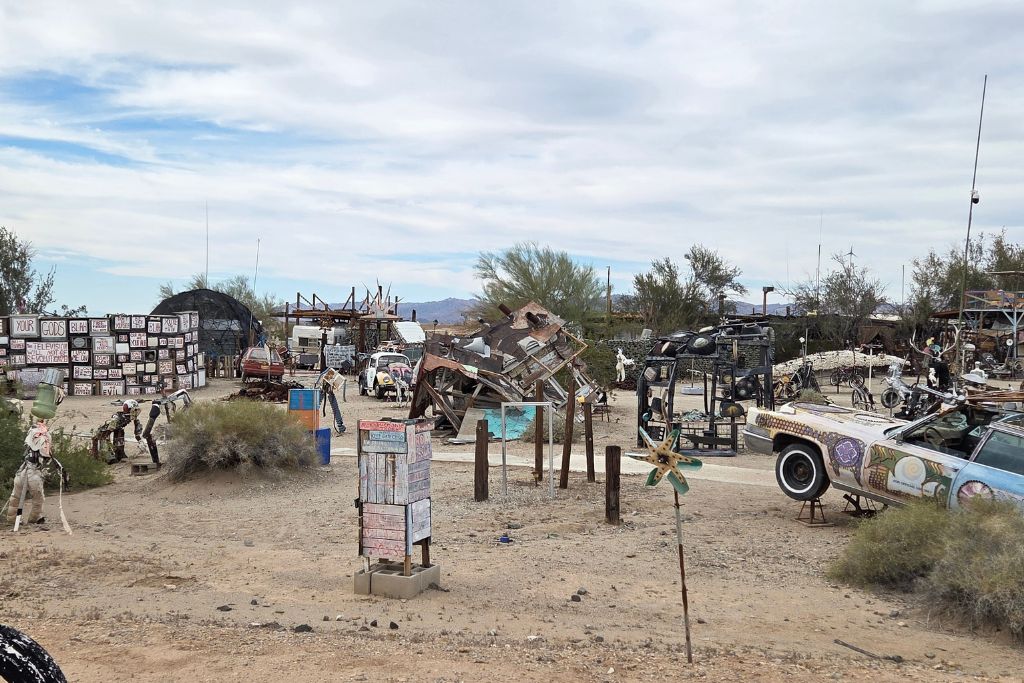
All of the materials used in the installations are donated or found in a trash heap.
From the Wall of TVs to the bizarre alters, this place deserves some time on your itinerary.
Salvation Mountain
Some would say this roadside oddity is an eyesore, while others like me say WOW!
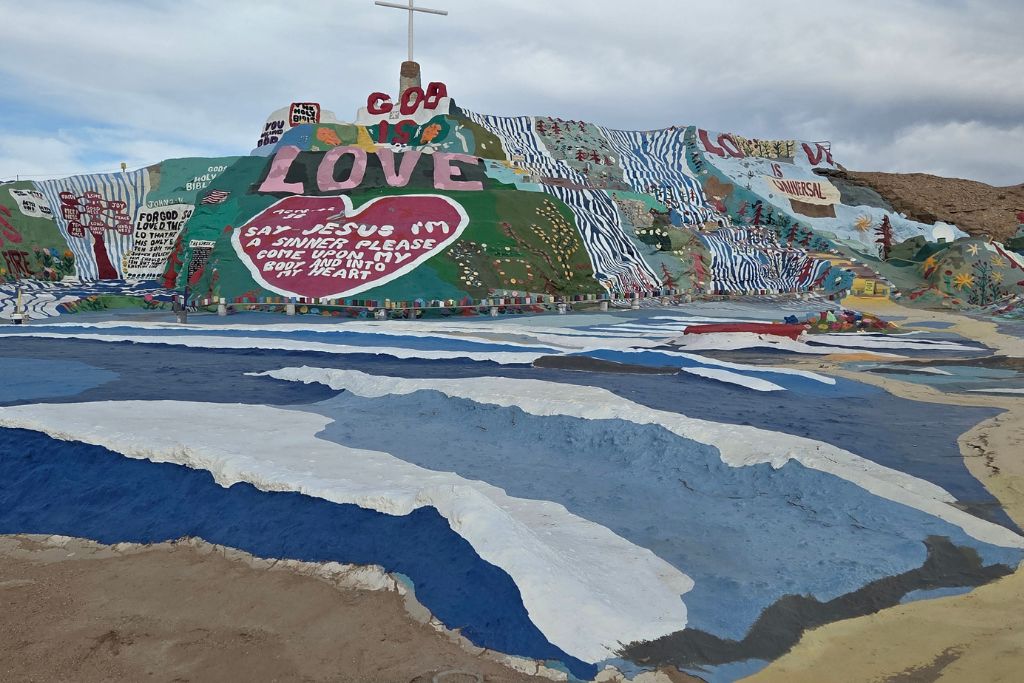
Built from love and a passion for his faith, Leonard Knight brought his dream to reality. The desert landscape now has a bit of color and a message to all who visit.
Salvation Mountain is a must-see when visiting this area. For lack of a better description, you can’t miss it!
Mud Volcanoes
If you like geology, then you will want to see the Mud Volcanoes. From a distance, they look like giant mud ant hills rising out of the desert floor.
This entire area sits near the San Andreas Fault and is filled with geothermal activity beneath the surface. Underground heat and steam push upward through wet clay and mud, creating bubbling pools and constantly changing mud formations.
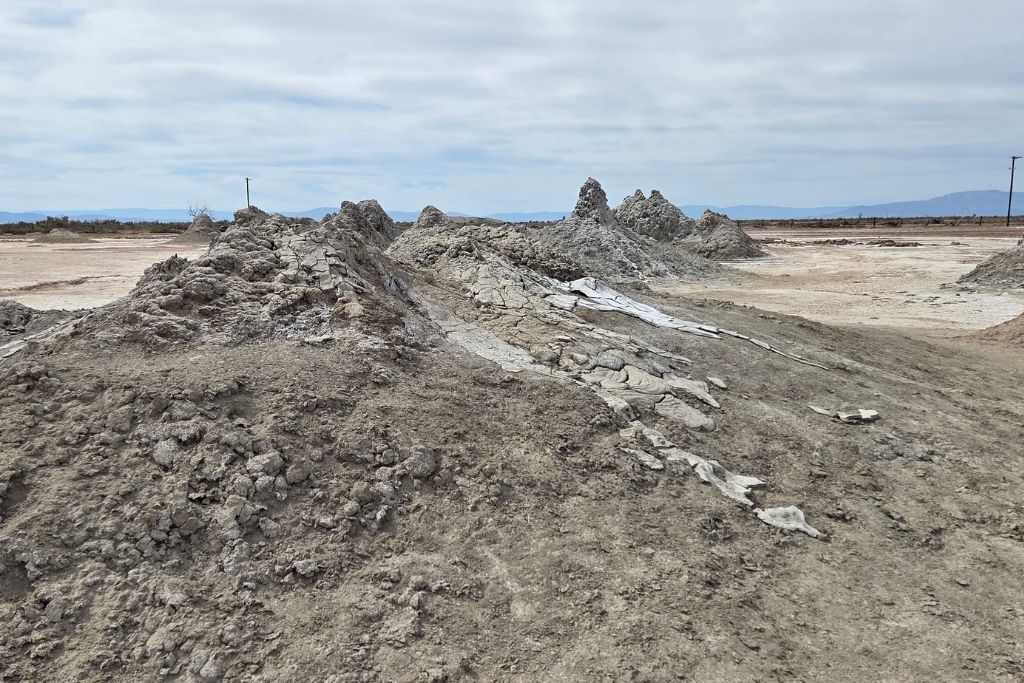
As the mud splashes and dries, it slowly builds these strange-looking cones and peaks.
The mud volcanoes can be difficult to find since some dry up while new ones form nearby. The ones we visited were near the John Featherstone Geothermal Plant. Please be advised that this is a no-trespassing area.
Dos Palmas Preserve
This was an unexpected stop near the Salton Sea. Just a short drive from Mecca Beach Campground is a massive palm tree oasis.
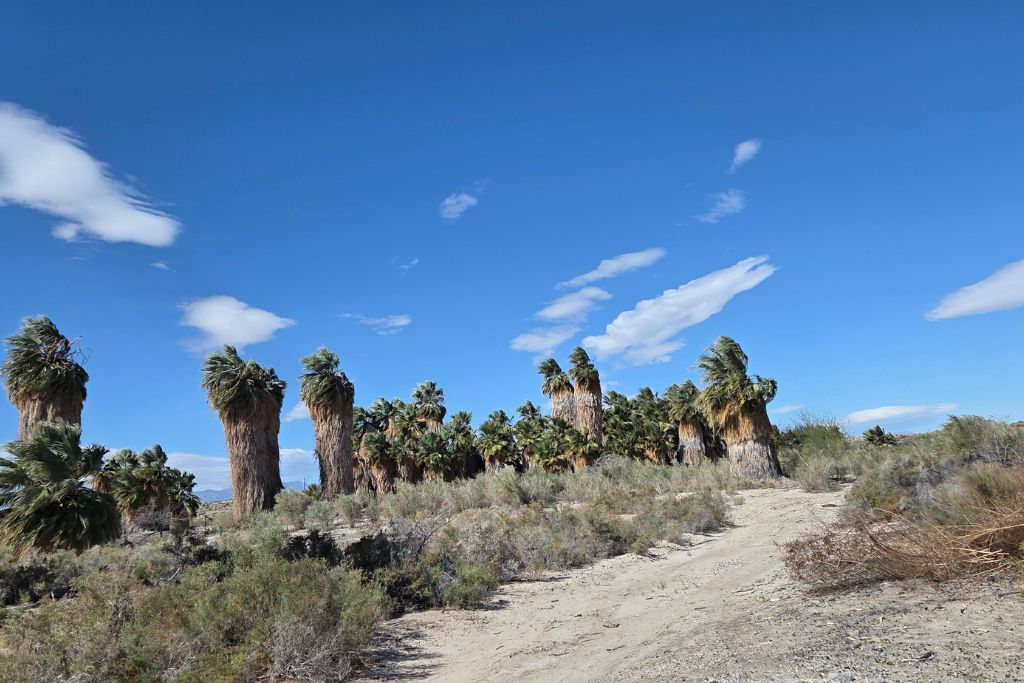
It felt like a jungle as we wandered through the palm trees. I have never been in anything like this before, and I kept expecting Bagheera to jump out at me.
We were the only ones there on a Saturday afternoon, which again added to the area’s isolated, almost faded feel. I would say this is a must-do hike when visiting the eastern side of the Salton Sea.
Things You Should Know Before Visiting the Salton Sea
The east side of the Salton Sea is one of the most haunting and isolated areas we explored in California, but this is not the kind of destination where you just “wing it.”
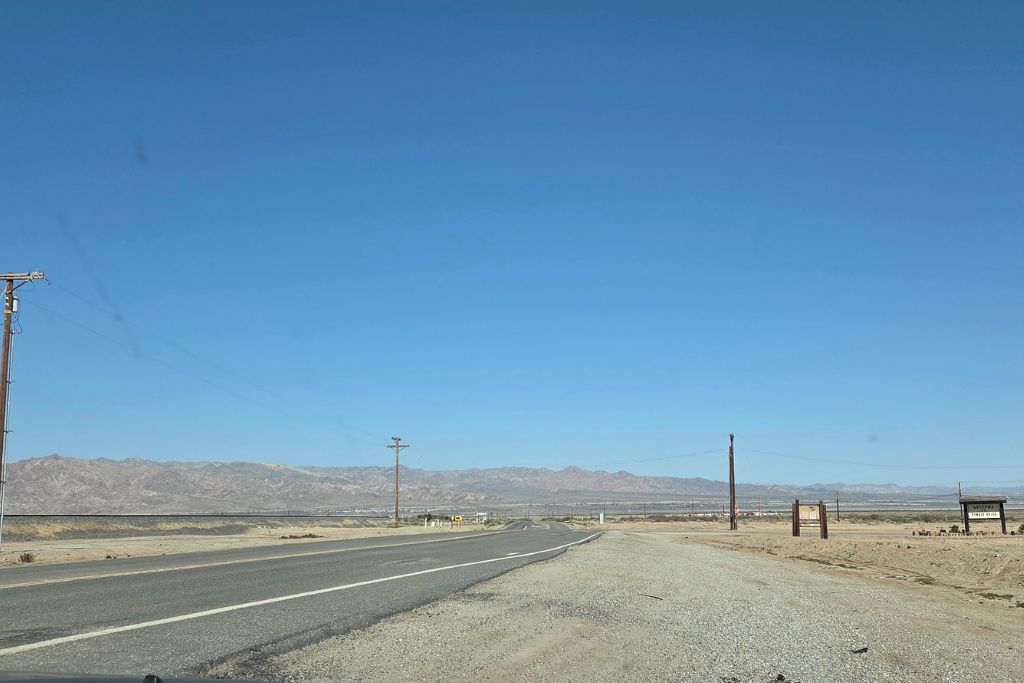
This area feels remote, isolated, and in some places almost post-apocalyptic. That’s part of what makes it so memorable, but it also means services are extremely limited once you get out there.
You need to arrive prepared.
Here are a few things we think visitors should know before making the trip.
- Bring plenty of water, especially during warmer months. Desert heat here can become dangerous quickly.
- Fuel up before arriving. We only remember seeing one fuel station on the east side of the Salton Sea, and distances between towns can feel much farther than they appear on the map.
- Food options are limited. Bombay Beach has a few small spots, including a cafe, a restaurant, and a bar. We also found a restaurant in Niland, but this is definitely not an area packed with chain restaurants, grocery stores, or fast food.
- We do not remember seeing public EV charging infrastructure in the area, so electric vehicle owners should plan carefully before heading out.
- Summer temperatures can become extreme. Triple-digit heat is common, and conditions can change quickly during spring and fall as well.
- Some roads and access areas can be rough, especially once you start exploring places like Slab City, East Jesus, and the shoreline.
- Do not drive onto the playa or muddy shoreline areas. The mud can behave almost like quicksand and easily trap vehicles.
- The smell near the shoreline changes depending on weather and wind conditions. Some days it is barely noticeable. Other days it can be very strong.
- Public restrooms are limited outside of restaurants and a few designated areas. We do not remember seeing many public facilities during our visit.
- Respect the local communities and artists living in the area. Places like Bombay Beach, Slab City, and East Jesus may feel peculiar to visitors, but people do live, create, and build communities here.
- If you enjoy photography, this area is incredible. Between decaying structures, desert landscapes, roadside art, old trailers, mountain backdrops, and dramatic sunsets, there is no shortage of unusual scenes to capture.
- Park rangers do patrol parts of the area, but don’t expect staffed visitor centers or campground booths everywhere. During our stay, the campground entrance station was completely unattended when we arrived.
The Salton Sea is one of those places where preparation makes the experience much more enjoyable. Once you know what to expect, it becomes easier to appreciate just how unique this part of California really is.
Best Time to Visit the Salton Sea
If you’re planning a trip to the Salton Sea, timing matters.
This is the California desert, and temperatures here can become extreme surprisingly fast.
We visited in early March and thought the weather was fantastic overall. The days were comfortable, the nights cooled down nicely, and while it was definitely windy at times, we still really enjoyed the experience.
Just a few weeks later, we were camping on the opposite side of the region, near Ocotillo Wells, and we ended up leaving early because the heat became overwhelming.
That’s how quickly conditions can change out here.
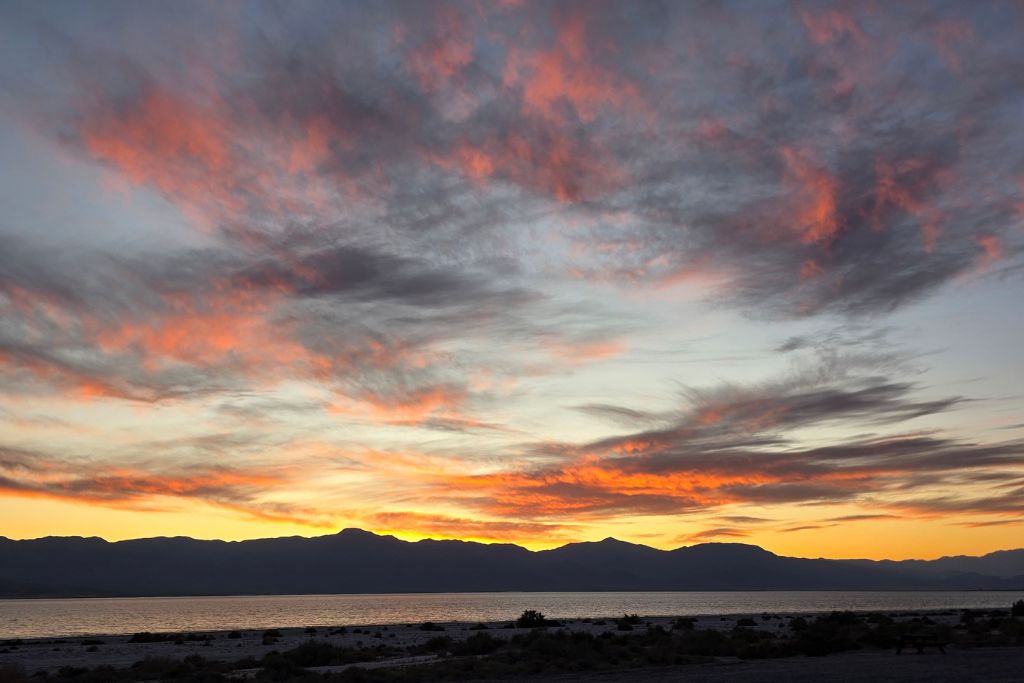
In general, late fall through early spring is the best time to visit the Salton Sea. Winter temperatures are usually mild during the day, though evenings can still get chilly once the sun goes down.
Spring can be beautiful, especially during good wildflower years, but wind is common throughout the desert this time of year.
Summer is a completely different story.
Temperatures regularly climb well into the triple digits, and the combination of heat, sun exposure, and dry air can make exploring uncomfortable and even dangerous if you are not prepared.
Another thing visitors should know is that conditions around the Salton Sea can vary from day to day. Wind direction, temperature, and water conditions all affect the smell near the shoreline.
Some days it’s barely noticeable. Other days it’s much stronger.
Winter and early spring are also popular seasons for birdwatching, as the Salton Sea lies along an important migratory route for many bird species.
If we were planning another visit, we’d probably aim for somewhere between late November and early April.
How Much Time Do You Need at the Salton Sea?
How long you should stay at the Salton Sea really depends on the kind of traveler you are.
Day Trip
If you’re simply curious about the area, you can see highlights like Bombay Beach, Salvation Mountain, Slab City, and East Jesus in a long day.
Overnight Trip
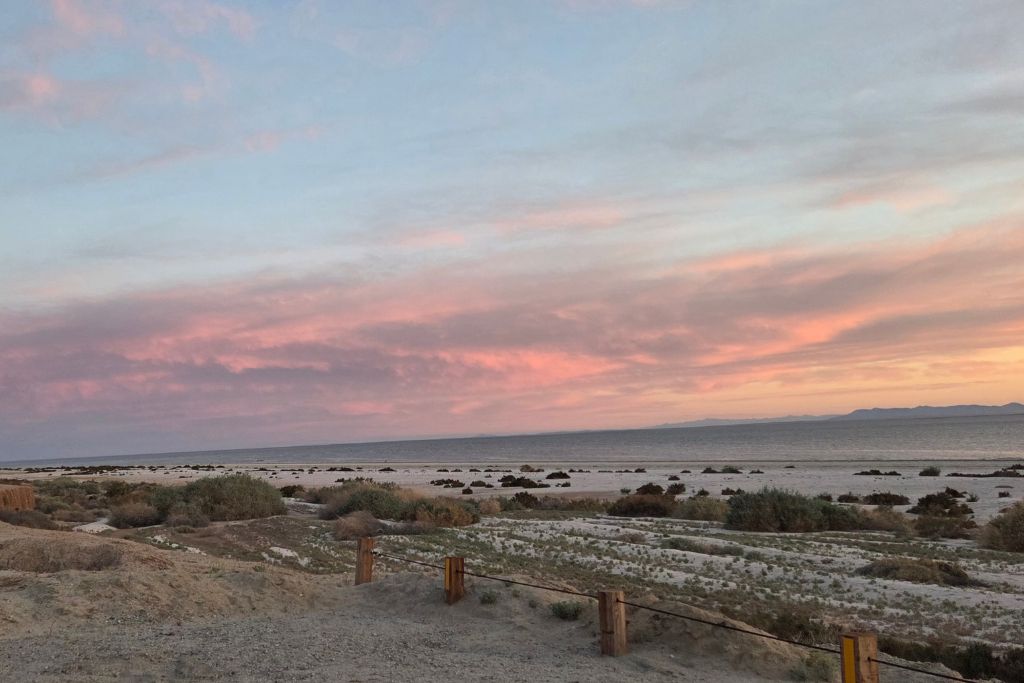
We think an overnight stay gives you a much better feel for the area. Sunset and sunrise completely change the atmosphere around the Salton Sea.
Full Weekend
A weekend gives time to explore small communities, art installations, hiking trails, photography spots, and the surrounding desert landscapes without rushing.
Photography or Exploration Trip
If you enjoy barren landscapes, desert photography, weathered roadside ruins, or offbeat road trips, you could easily spend several days exploring the area.
Camping and Where to Stay Near the Salton Sea
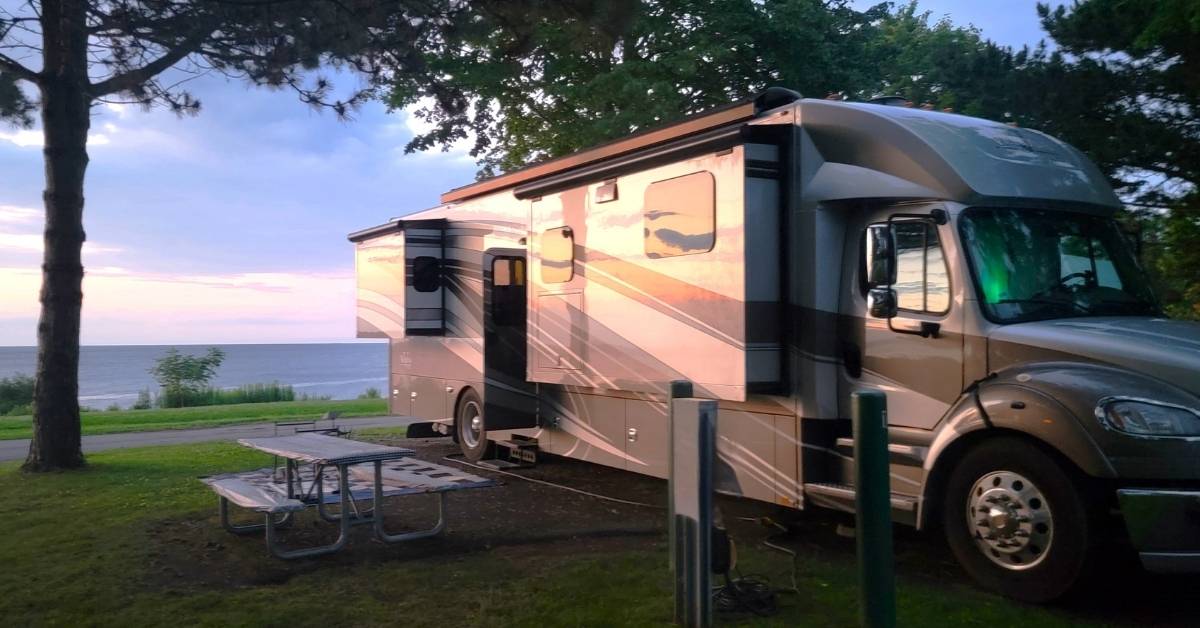
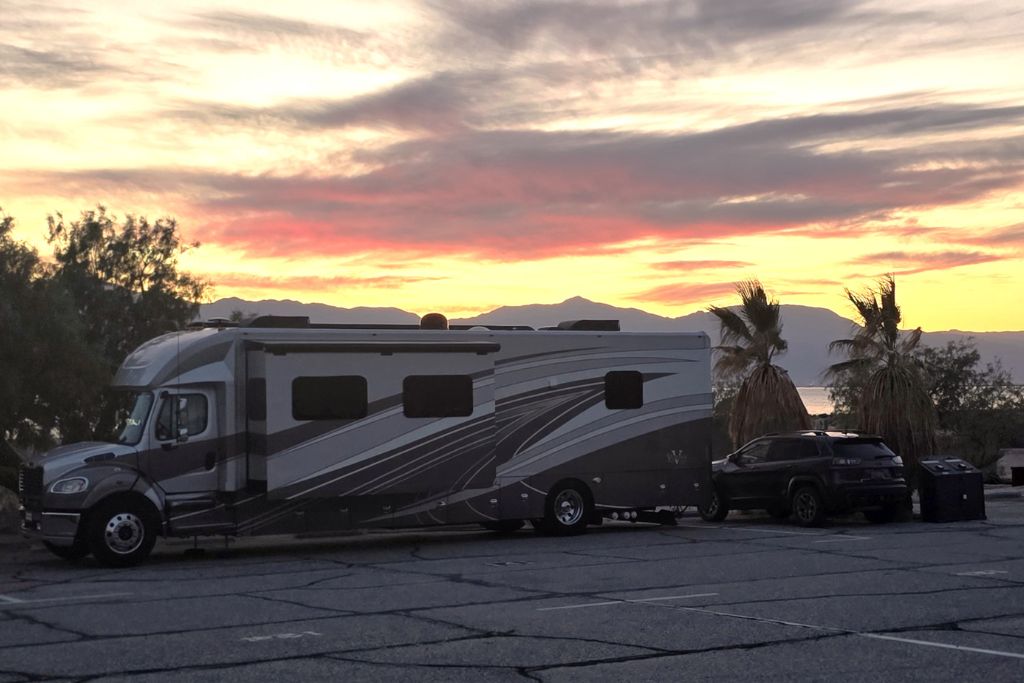
While there are a few camping options along the Salton Sea, we chose Mecca Beach Campground and booked a waterfront RV site with electric and water hookups.
What the description doesn’t tell you is that the shoreline has receded so far that the actual water sits roughly half a mile from parts of the campground. The Salton Sea is literally shrinking before your eyes.
When we arrived, we weren’t quite sure if we should stay. The campground felt almost deserted, with no ranger at the entrance and very little activity anywhere around us.
But once we settled in, the stay turned out to be peaceful, quiet, and surprisingly relaxing. The sunsets alone made it worth it.
If camping isn’t your thing, Palm Springs is only about an hour away and makes a great base for exploring the Salton Sea region as a long day trip. Mecca, Indio, and nearby desert communities also offer a few smaller lodging options, though choices become much more limited once you get closer to the eastern shoreline.
This is definitely not a resort-heavy destination anymore, so it’s best to plan accommodations in advance.
A Brief History of the Salton Sea
The Salton Sea exists because of an accident.
Back in 1905, engineers were diverting water from the Colorado River into California’s Imperial Valley when flooding caused the river to break through the irrigation canals. For nearly two years, water poured into the dry Salton Basin before engineers finally stopped the flow in 1907.
That accidental flooding created the Salton Sea.
Because the basin sits more than 200 feet below sea level with no natural outlet, the water had nowhere to go except to evaporate. Over time, salt, agricultural runoff, and pollutants became trapped in the lake.
But for a while, none of that stopped developers from seeing potential here.
How the Salton Sea Became California’s Strangest Lake
In the 1950s and 1960s, the Salton Sea was promoted as a glamorous desert resort destination. Marinas, yacht clubs, golf courses, waterfront neighborhoods, and resorts appeared around the shoreline, attracting visitors from across Southern California.
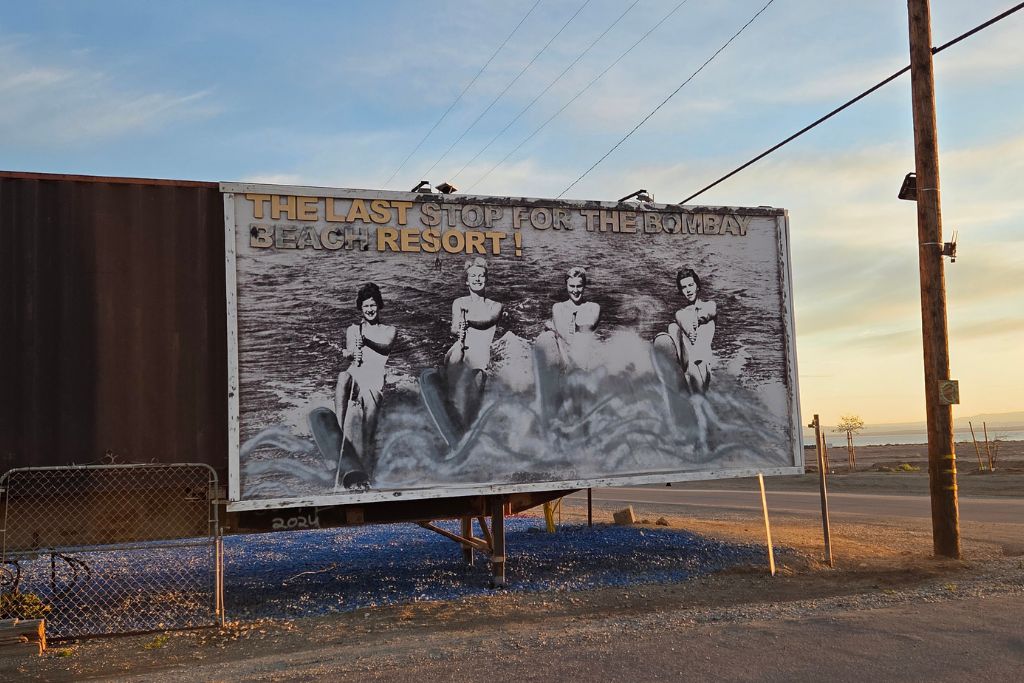
At its peak, the Salton Sea reportedly drew more visitors than Yosemite National Park.
Looking at it today, that almost feels impossible to believe.
You can still see traces of that era scattered around the shoreline—empty marinas, neglected buildings, and aging beach communities slowly being reclaimed by the desert.
Over time, increasing salinity, pollution, flooding, and environmental decline drove tourism away. Fish populations collapsed, bird habitats suffered, and many businesses shut down.
Now, the Salton Sea feels less like a traditional tourist destination and more like a place caught between abandonment and survival.
That’s also what makes visiting so fascinating.
The Salton Sea Redefines What Beauty Looks Like
At first glance, the Salton Sea almost looks beautiful in the way you expect a California destination to be. The water is deep blue. Mountains rise in the distance. Palm trees sway along quiet roads.
Then you start noticing the details.
Abandoned marinas are collapsing into the shoreline. Empty buildings are slowly being reclaimed by the desert. The smell of salt and decay lingers in the air. Beaches covered not in soft sand, but in crushed fish bones and shells that crunch beneath your feet.
It feels unsettling at times. Almost apocalyptic.
And yet, that’s what made us unable to stop exploring.
The Salton Sea doesn’t feel polished or designed for tourists. It feels raw. Honest. Like a place caught between abandonment and survival.
Some moments were genuinely beautiful. Others felt uncomfortable. Driving through Bombay Beach almost felt like stepping into another world entirely—one where people stayed long after everyone else left.
That contrast is what stayed with us most.
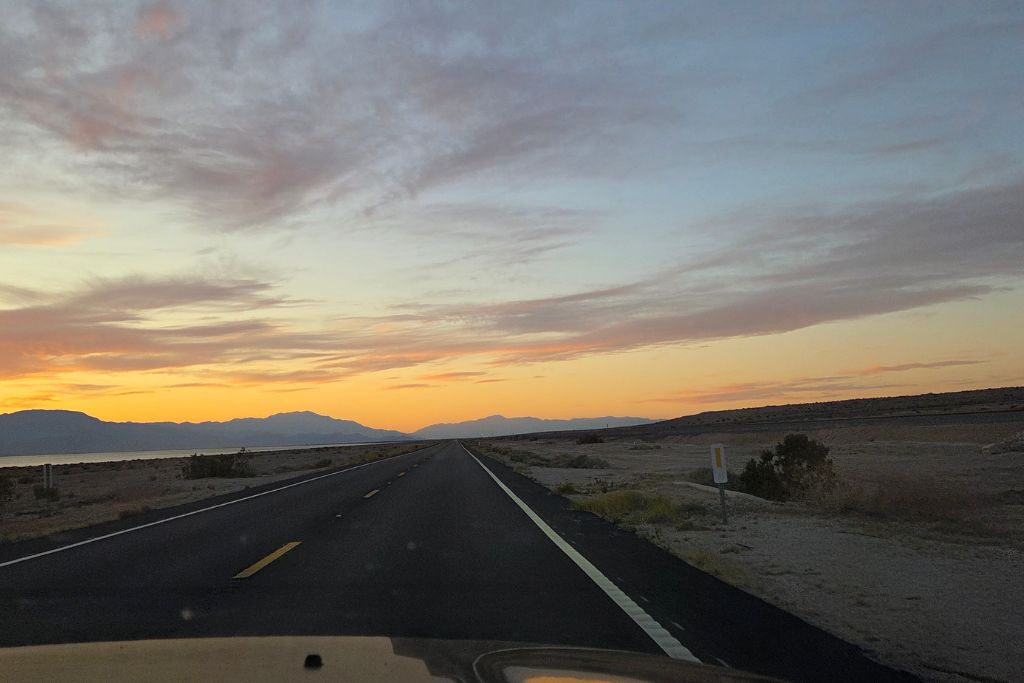
Not every California destination needs to be relaxing or glamorous to be worth visiting. Sometimes the places you remember most are the ones that make you feel slightly uneasy. The ones that leave you feeling a little unsettled, but also weirdly fascinated.
The Salton Sea won’t be for everyone.
But if you’re the kind of traveler who enjoys unusual places, forgotten history, strange roadside attractions, and destinations that feel completely unlike anywhere else in California, this might end up being one of the most memorable stops on your road trip, too.
Places like this are exactly why we love life on the road.
If you enjoy discovering offbeat destinations, hidden backroads, unusual roadside stops, and the kind of places most travelers drive right past, make sure you Join our newsletter below.
We share the places that surprised us most, the stories behind them, and the adventures that make road life unforgettable.
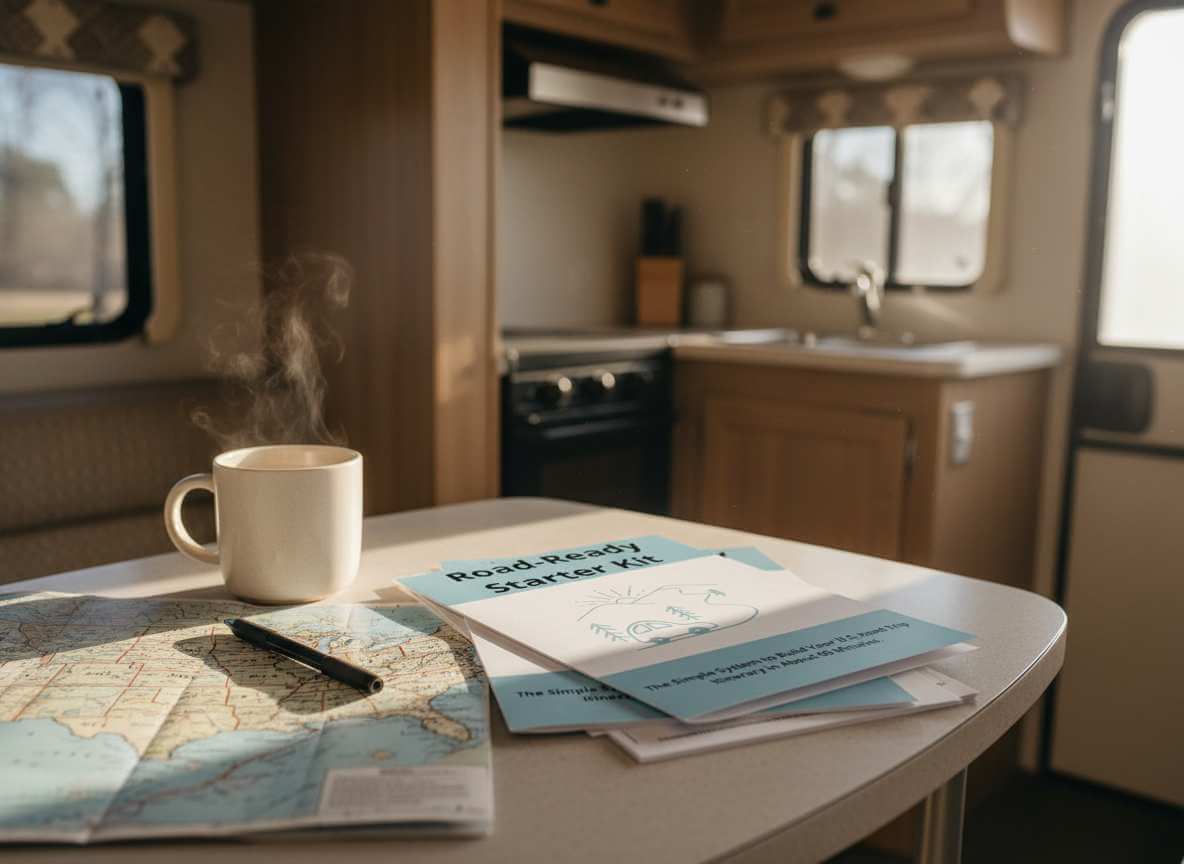
You can also grab our free Road Ready Starter Kit, packed with road trip tips, planning tools, and travel resources we use ourselves while exploring places like this.
California still has places that feel undiscovered, and the Salton Sea is definitely one of them.
It is full of places that feel completely different from each other. One week you’re standing beside the haunting shoreline of the Salton Sea, and the next you could be driving the cliffs of Big Sur.
Travel Safe and Adventure Often,
Maureen & Robb

Plan Your Next Road Trip in About 60 Minutes
Stop overplanning and start enjoying the drive.
This free Road Ready Starter Kit walks you through our simple system for building a flexible U.S. road trip itinerary in about an hour.
You’ll get trip planning pages, a quick budget planner, packing and safety checklists, and our proven method for adding one fun, memory-making stop to every travel day.